The Risk of Using IT Service Management Tools (ITSM-Tools) Outside of ITSM
Author Philipp HansertPublished August 26, 2019
Executive Summary
A saturated ITSM market is pushing vendors to pitch their tools as one-stop platforms, promising to absorb functions your organization already runs elsewhere. Following that pitch doesn't consolidate anything — it trades a manageable multi-tool landscape for expensive customization and permanent dependency on a vendor whose core product was never built for the job.
Key Findings
- ITSM vendors are rebranding their products as enterprise service management tools to drive upsells into non-ITSM functions, a strategy that is cautioned against.
- Extending ITSM tools beyond their core purpose leads to expensive customizations, deep vendor dependency, and solutions that are not designed for the intended use case.
- Vendors frequently lack the process competence and consulting capacity to support complex implementations outside their core domain, leaving customers without adequate guidance.
- A lean, integrated IT system landscape, combining purpose-built tools for architecture, financial, and portfolio management with specialist peripheral systems, consistently outperforms monolithic all-in-one approaches.
- Standard solutions from established manufacturers, properly integrated, deliver better outcomes than heavily customized single-vendor platforms.
Recommended Actions for CIOs
- Resist vendor upsell pressure to extend ITSM tools into program and portfolio management, procurement, or risk management without rigorous evaluation.
- Draw a clear line around what your ITSM tool is for and procure purpose-built tools for everything outside that scope.
- Prioritize integration over consolidation: connect specialist tools through a central IT management layer rather than forcing one tool to do everything.
- Evaluate vendors on process competence and consulting capacity, not just product functionality, especially before letting one platform absorb more scope.
- Favor standard, vendor-supported configurations over heavy customization, even when a fully tailored single-vendor setup looks simpler upfront.
Buying a tool that promises everything is the fastest route to a system that delivers nothing it was designed for. CIOs who define their IT landscape with precision, and resist the allure of the all-in-one pitch, will build management capability that scales without the cost of constant remediation.
TSM tool vendors are increasingly extending their functionality to non-ITSM areas such as Program & Portfolio Management. This sounds tempting, but there are dangers that are addressed in this article.
1 · The Risks We Are Facing
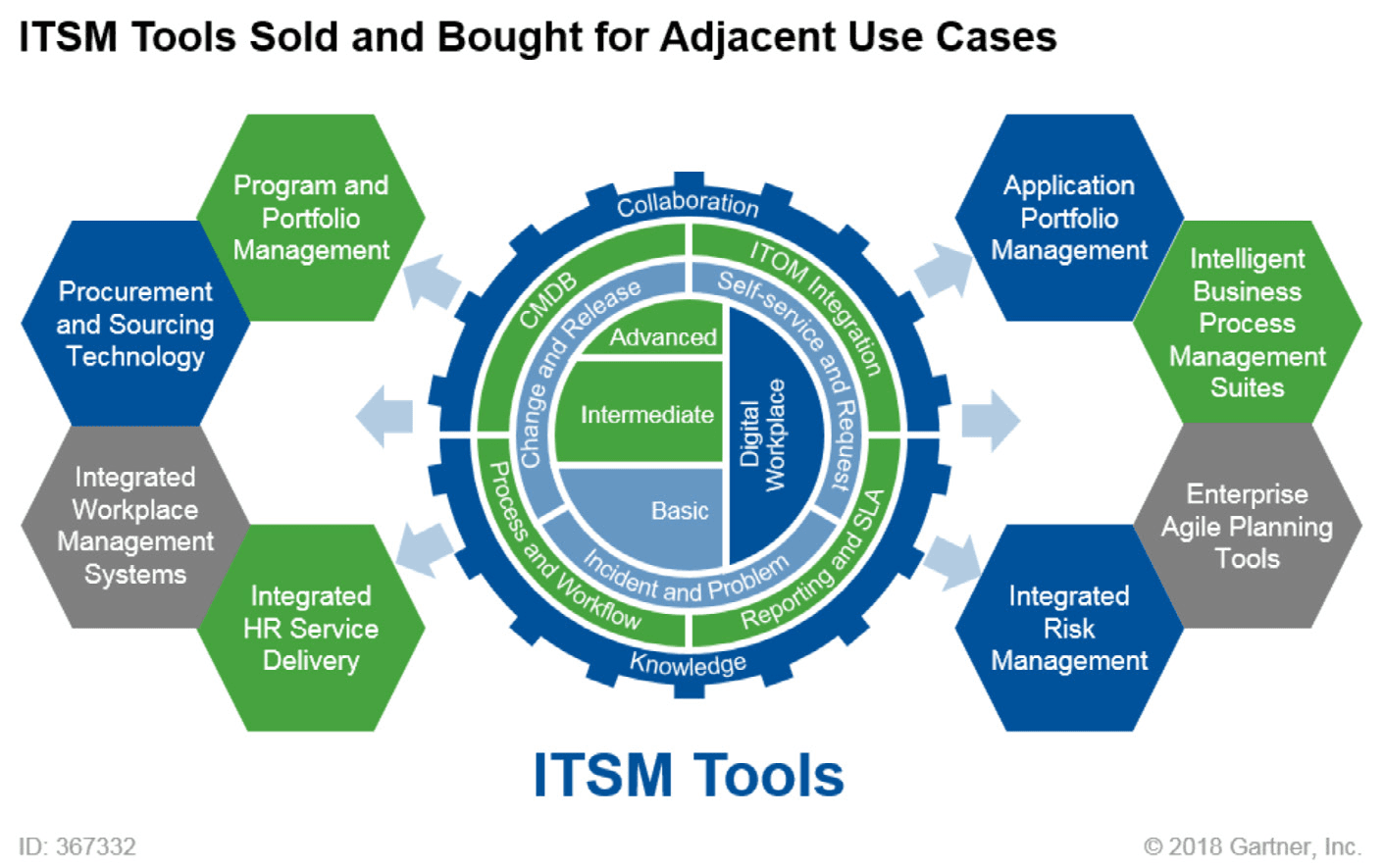
Figure 1. ITSM tools with core and adjacent use cases, Gartner (August 2018)
According to Gartner Inc., „the market for ITSM tools is saturated with more than 450 products, making it increasingly difficult for most vendors to grow their market share. For this reason, vendors complicate purchasing decisions by trying to upsell their products for existing customers and rebrand their offerings as general-purpose workflow tools that can connect anything and everything. Vendors most commonly refer to this use case as enterprise service management, and some have rebranded their products as ESM tools.” Some examples of adjacent use cases are “Program & Portfolio Management, Procurement & Sourcing Technology und Integrated Risk Management”.
The approach of Gartner, Inc.
Gartner Inc. advises, “I&O leaders that like the idea of using ITSM tools beyond the scope of the ITOM engagement management tools minisuite must carefully weigh their options when considering an ITSM tool for its versatility.” It goes to say, “The marketing language that vendors use is reminiscent of the rush to deploy enterprisewide ERP software suites at the turn of this century. The legacy of that rush was bloated customized applications that didn‘t fully meet the needs of the business and from which organizations struggled to migrate.“
We could not agree more! With expensive customizations, companies bind themselves to individual solutions that are not designed for the intended purpose. Additionally, there is a far-reaching dependency on the vendor.
Often the vendor cannot meet the high demand for consulting services. In particular, there is a lack of process competence at management level. As a result, complex technical functionalities are implemented in the systems and the possibilities of better and simpler processes are often not recognized due to a lack of experience - the customer is left without adequate support.
But what to do? After all, there are many different areas in IT that require suitable solutions. The idea of doing all this using one system is not that far-fetched…
2 · Our Way to Avoid this Risk: Bee4IT
With Bee4IT, we at Clausmark offer a straightforward but fundamentally different approach to this problem. Bee4IT offers data-driven IT management with fast and transparent decision making. The main facets of IT management in Bee4IT are:
- Enterprise Architecture Management- what is our business, our technical heritage and our digital ambition?
- Financial Management- what are the costs and what resources do we have?
- Program & Portfolio Management – how do we manage change to support the business fast and cost efficient?
Bee4IT is designed to integrate into the existing systems and thereby meets the need for information and data-driven IT management:
- The ERP system primarily for fetching actual financial data and linkage to the corporate budgets
- An ITSM tool for ticketing, request, problem and change management with focus on operational service delivery
- An enterprise content management (ECM) tool for the document management and the Wiki
- Development tools (DEV) for integrated custom software delivery
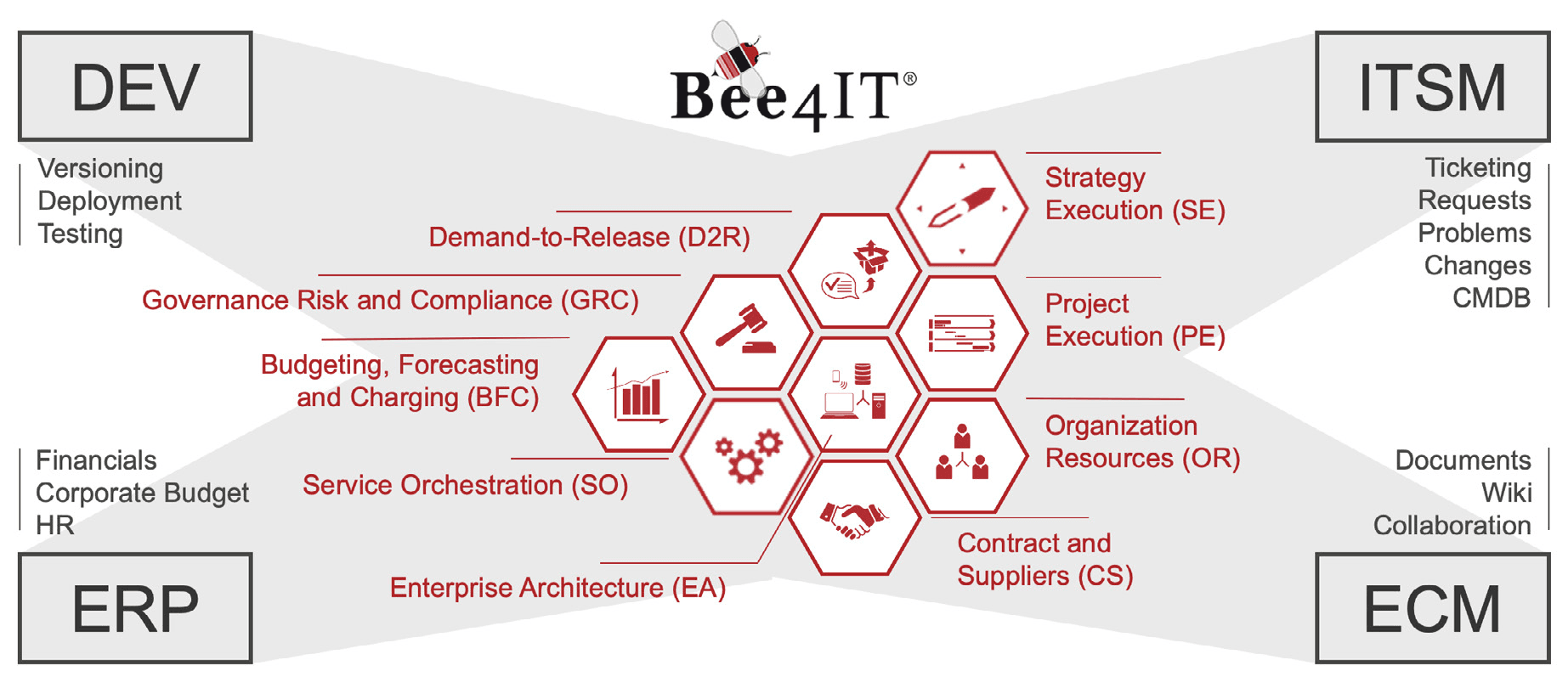
Figure 2: Holistic IT management with Bee4IT
Our way of avoiding the risks is based on a lean and effective IT system landscape and creates a central point of access for the entire IT management. All this using only standard solutions from the vendors.
Subscribers read the complete report „The Reality of ITSM Tools as Enterprise Service Management Tools“ at Gartner (external link).
3 · Bee4IT in Practice
Video: Bee4IT in practice
Are you interested?
At the Bee4IT IT-Management Symposium 2018, Maik Wittenborg (Miele & Cie. KG) presented how a holistic management of IT is implemented with the help of Bee4IT at Miele & Cie.
Agenda
- The situation at Miele before using Bee4IT
- Enterprise Architecture Management (EAM) with Bee4IT at Miele
- Project & Portfolio Management (PPM) with Bee4IT at Miele
- Financial Management (FM) with Bee4IT at Miele
- Future innovations at Miele in the cooperation with Bee4IT
About Bee360
Bee360 is unique because we combine software, consulting — and BeeCore. BeeCore is our proprietary steering model: a battle-tested framework of five adaptive IT governance practices that connects methodology, people, and technology into one coherent approach.
Bee360 is recognized in the Gartner Magic Quadrant for Enterprise Architecture Tools and across three analyst markets — Enterprise Architecture Management, Strategic Portfolio Management, and Digital Twin of the Organization.