Rolling Planning: When the Annual Plan Is Obsolete Before January Ends
How US IT leaders are replacing the annual budget cycle with a planning model that keeps pace with business.
For: CIO, VP of IT, CFO (in organizations where IT reports to or closely partners with Finance), COO in manufacturing and construction
By the Numbers
The Scale of the Problem
The Challenge
The Annual Plan Breaks Before the Fiscal Year Begins
Every year, IT leaders in US enterprises go through the same ritual. The annual planning cycle begins in Q3, produces a budget locked by Q4, and is presented to the board as a commitment. By mid-February, the business has changed in ways nobody planned for. A competitor moves. A regulatory requirement lands. The CEO announces an AI initiative that was not in the plan. The CIO now faces a choice between explaining why the plan is wrong and finding the capacity to respond without a framework for doing so.
This is not a new problem. But it is a structurally worsening one. Gartner’s research on the 2026 CIO Agenda found that annual and quarterly planning cycles are now effectively obsolete — yet only 18% of CIOs have adopted dynamic, off-cycle reprioritization. Those who have are 24% more likely to be top performers. The gap between the planning model and the pace of business change is not a gap that more rigorous annual planning will close. It requires a different model entirely: rolling planning.
The financial consequences are significant. Large IT projects run an average of 45% over budget and deliver 56% less value than predicted. Gartner found that 64% of strategy leaders report needing to change at least half their business plans after the annual cycle concludes — yet only 29% say their organizations change fast enough to respond to disruption.
Trusted by leading organizations








Take the Next Step
See How Bee360 Solves the Planning Problem
What IT Leaders Are Saying
With our current market volatility and uncertainty, things can change on a dime. CIOs must adopt a more flexible, scenario-based approach to budgeting, with contingency plans in place for economic and market shifts and the ability to quickly make modifications accordingly.
We all want to have better returns for our investors and operate better for our owners, and that flows down to how we manage costs and optimize investments. So, we’re focused internally on improving what we have in place, as well as consolidating and simplifying to reduce costs.
The Bee360 Solution
A Plan Designed to Be Updated — Not Frozen
Most IT organizations do not fail at annual planning because their people lack discipline. They fail because the instrument itself — a single locked plan, built on twelve-month assumptions — is not designed for the environment it is being asked to govern.
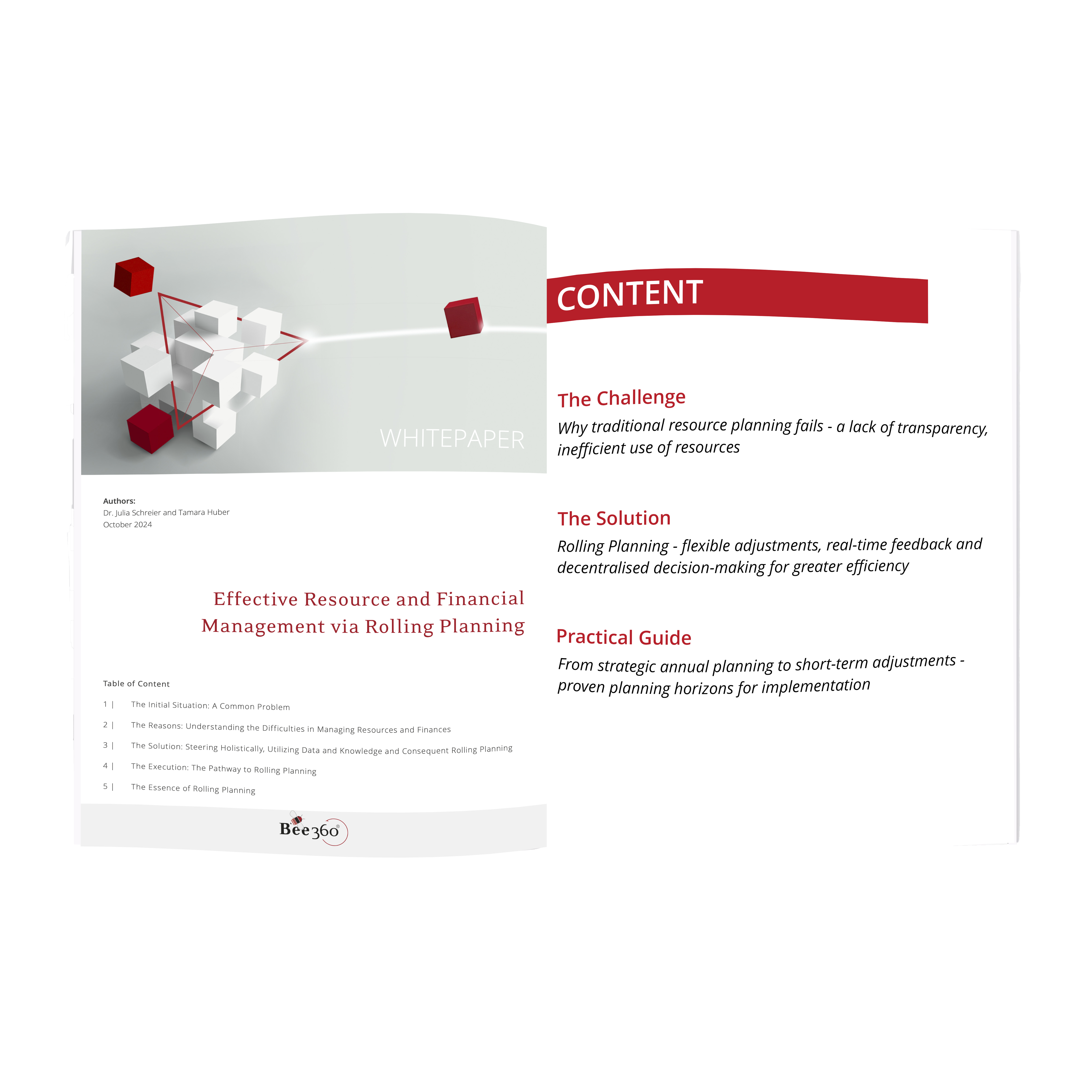
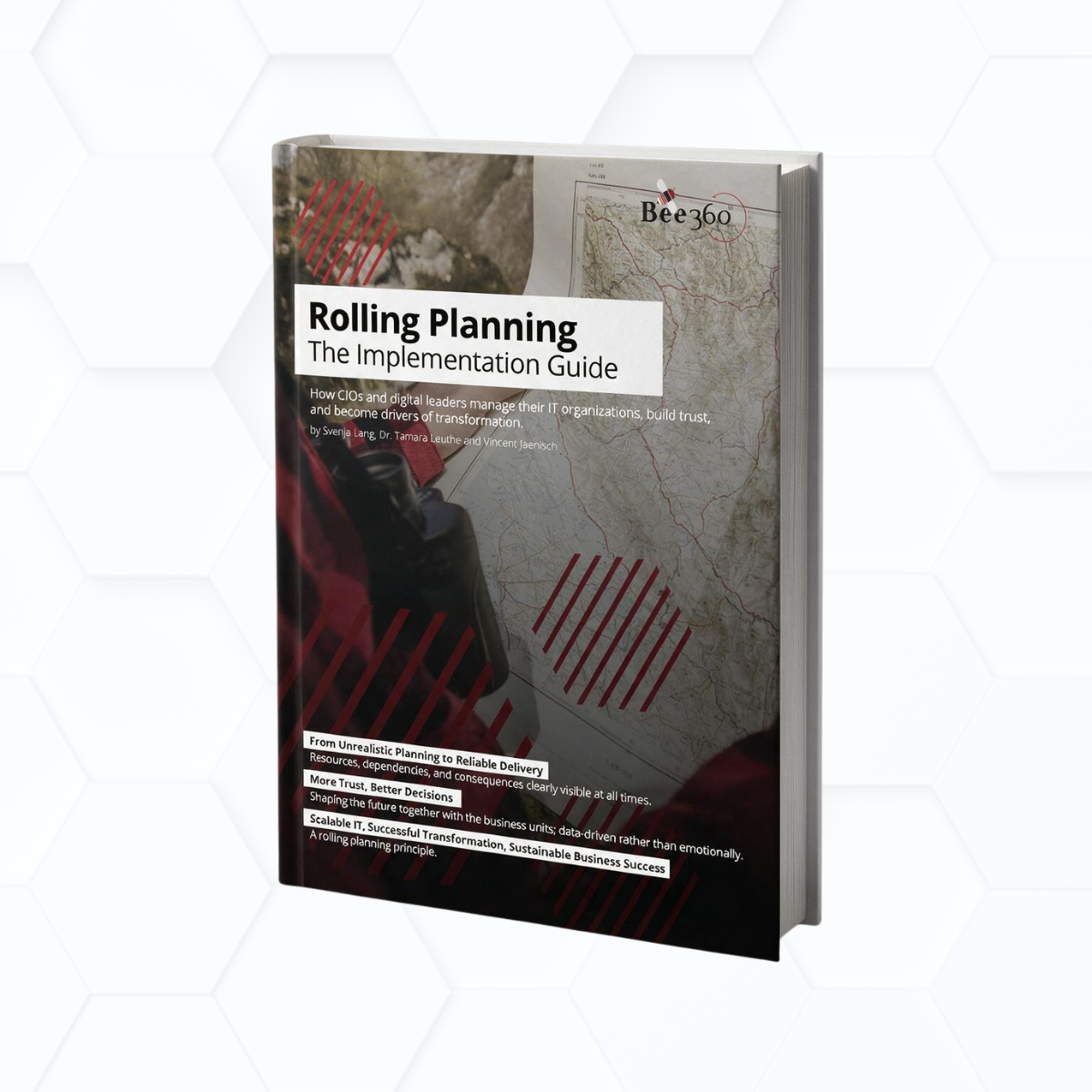
Bee360’s approach to rolling planning replaces the annual commitment cycle with a continuous management model: one integrated view of IT capacity, financial commitments, and active portfolio that is updated in short cycles rather than frozen for a year. The model does not eliminate planning rigor — it applies that rigor continuously.
When a new priority arrives in June, the question is no longer “where will the money come from” but “here is the current capacity position, here are the trade-offs, and here is what we recommend.” That is the conversation that turns an IT leader from a budget manager into a strategic partner — and it is the conversation Bee360 is built to enable.
Bee360 is recognized in the Gartner Magic Quadrant for Enterprise Architecture Tools and across three analyst markets — EAM, Strategic Portfolio Management, and Digital Twin of the Organization.
Proven Results
Results Across Industries
Leading organizations trust Bee360 to transform their IT governance. These are measurable outcomes — not theoretical projections.

Orchestrating digital transformation for over 900 stakeholders. Reduction of the global performance billing process from weeks to one day with automated planning.

Complete IT transformation achieving 360-degree visibility across global operations. From Excel-based planning to integrated IT management.

IT transformation from reactive cost center to strategic business partner. IT maturity achieved in 1 year that typically takes 3–5 years according to Gartner benchmarks.

"Despite the COVID-19 pandemic and a major organizational change, we were able to secure fiscal year planning in Bee360 in a very short period of time. With the concepts of Clausmark and Bee360, we achieved financial transparency across the entire CDO and IT portfolio."


"With Bee360's capacity management, I have a clear view of the time our team spends on daily IT services and ongoing optimizations. This allows me to demonstrate solidly that our IT department is already heavily involved in projects, and that prioritization is necessary."

Have Questions? Get in Touch With Us.
Grab 15 minutes with our team — no product pitch, just straight answers.
Just 15 minutes
Fast, no-pressure answers
Ask us anything about Bee360
No commitment required